

Your new concrete driveway needs extra care through its first Minnesota winter. It's still curing, and freeze-thaw cycles and deicing chemicals can damage it. A little care now helps it last longer and look better.
We see it around the Brainerd Lakes Area, from Brainerd to Crosslake and Pequot Lakes. Cold, snow, and ice are hard on new concrete, especially during that first season.
Why New Concrete Needs Winter Care
Concrete Takes Time to Cure
Concrete doesn't just dry. It cures through a chemical process that can take weeks or months to reach full strength. During the first few months, excess moisture is still evaporating and reacting inside the slab. New concrete is more porous and absorbs water more easily than fully cured concrete. When that water freezes, it expands. The pressure can cause scaling (surface flaking) or spalling (deeper pits).
Freezing and Thawing Add Stress
Minnesota temperatures keep moving above and below freezing. Water inside the concrete freezes and thaws with them, stressing the slab while it's still gaining strength. This is the main cause of damage to young driveways. Keeping water out and ice off gives the concrete time to harden.
Skip the Deicers
Salt Can Damage New Concrete
Avoid all deicing chemicals during the first winter. Chloride salts, including rock salt and calcium chloride, increase freeze-thaw cycles and can react with the concrete. They can also leave salt in the surface that causes more scaling and spalling later.
Use Sand for Traction
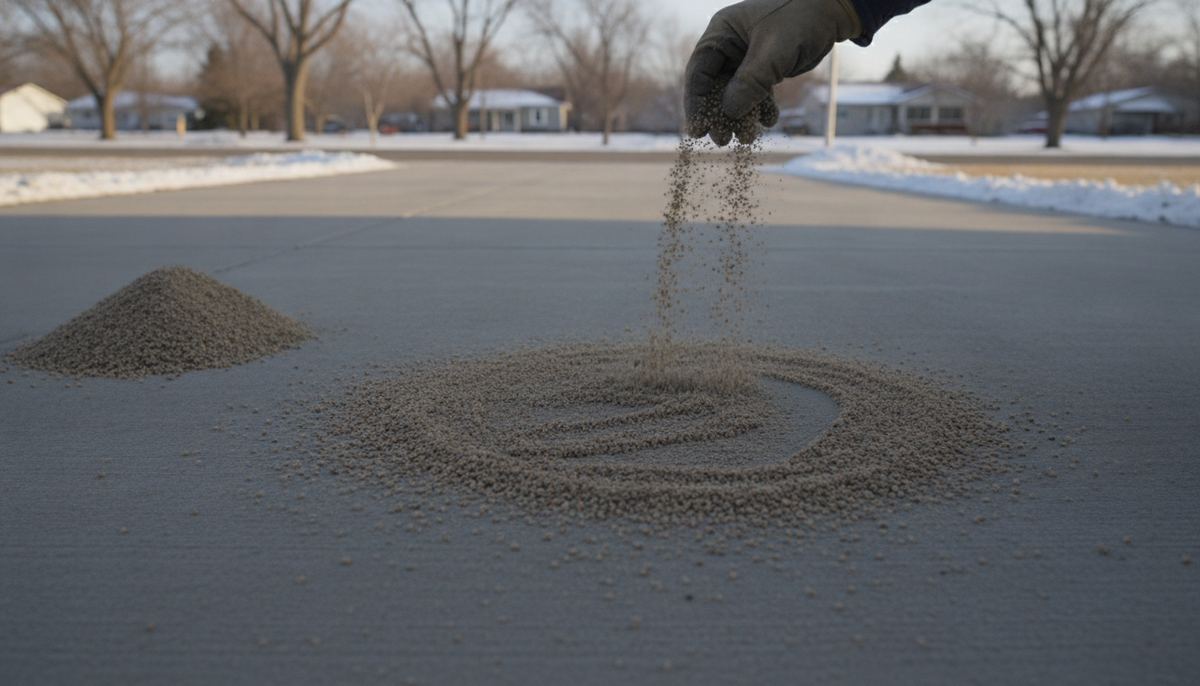
Plain sand gives tires and boots grip without damaging the concrete. Other non-chemical grit works too. Sweep up the extra in spring so it doesn't wash into storm drains or collect in low spots.
Shovel and Plow Carefully
Keep Metal Off the Surface
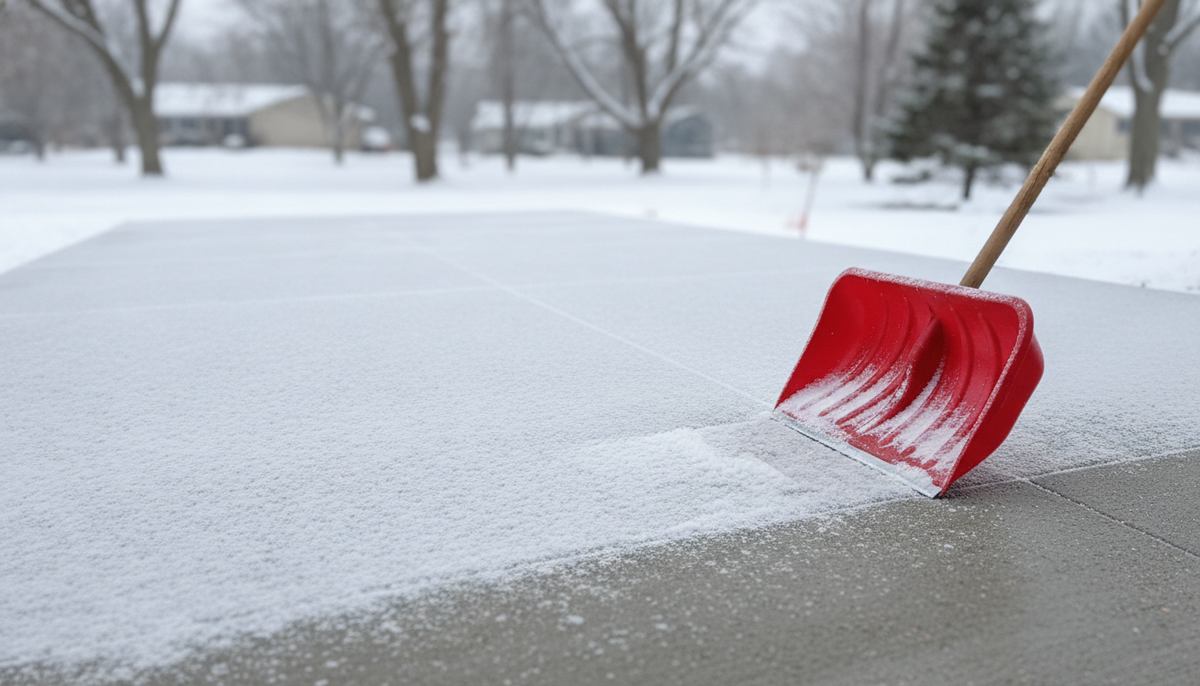
Young concrete is softer and easier to scratch or gouge. Metal shovels and plow blades can leave marks that let water in. Use a plastic shovel or a snow blower with plastic skids. Set the blower high enough that it doesn't scrape the driveway.
Protect Your Plow Blade
Use a rubber or plastic edge guard on the plow blade. Lift it slightly off the concrete, and don't push down hard, even with a guard. Remove the snow without scraping the surface.
What Minnesota Winters Do to Concrete
Deep Frost and Road Salt
The Brainerd Lakes Area has some of the toughest winter conditions for concrete. Deep frost freezes and expands the soil, causing frost heave that stresses slabs. Add repeated freezing and thawing, plus road salt used from October through April, and a new driveway has a lot to handle. Closed cabins and out-of-town owners' properties need extra attention if snow isn't cleared regularly.
Late Pours Have Less Curing Time
Our pouring season usually runs from spring through fall. Concrete can't be poured on frozen ground. Late-season driveways have less time to cure before winter, so that first winter needs extra care. We give first-winter care tips with every concrete driveway we pour.
When to Seal Your Driveway
Give It Time Before Sealing
Most sealer manufacturers recommend waiting at least 28 to 30 days after the pour. Concrete needs time to release moisture and finish its initial cure. Sealing too soon can trap moisture and slow curing. For a late-fall pour, waiting until spring to apply a good penetrating sealer may be best. We do concrete sealing too.
What Sealer Does
After the concrete has fully cured, a good penetrating sealer reduces water absorption, freeze-thaw damage, and stains from oil and other spills. It helps the driveway last longer and hold its appearance. Sealing is part of long-term care here, but it doesn't replace careful first-winter maintenance.
Keep Meltwater Moving
Don't Let Water Sit
Meltwater needs to drain off the driveway and away from its edges. Puddles can refreeze into slippery patches and cause freeze-thaw damage. We set the grade and slope during installation, but snow piles and ice dams can still block drainage.
Watch Where You Pile Snow
Clear snow from the driveway and nearby areas before it builds up and traps water. Point downspouts away from the concrete. If you see puddles, check your snow piles. Moving where you shovel or plow the snow may let the water drain instead of refreezing on the slab.
When to Call a Concrete Contractor
Damage Worth Checking
Call a contractor if you see widespread scaling, spalling, deep cracks, or major unevenness after the first winter. Minor surface changes can happen. Larger damage may point to a problem with the mix, installation, or base. Finding it early can keep it from getting worse and needing bigger repairs.
How We Handle the Work
We start with a thorough site walk and a free on-site quote with a written price. Our work includes base prep and compaction, proper forms and control joints, and the right mix and curing methods for our climate. Tear-out, haul-away of old concrete, and clean-up are included. Beach Construction LLC is owner-run. Eric Beach started it with one truck, and every job still gets that same attention, including the parts you don't see under the driveway.
Common Questions
How long should new concrete be covered in cold weather?
Usually at least 3 to 7 days, depending on the weather and mix. Covering protects it from freezing while it gains early strength. Keep snow, ice, and deicers off the driveway throughout its first winter.
Does a new concrete driveway need to be sealed?
Yes. Sealing helps protect driveways in the Brainerd Lakes Area from moisture, freeze-thaw damage, and stains. Wait until the concrete has fully cured, typically 28 to 30 days. For late-season pours, the following spring is often best.
What can be done to prevent new concrete from freezing?
Concrete is usually poured above 40 degrees Fahrenheit. Insulating blankets or straw can keep it warm during early curing. Through the first winter, avoid deicers and keep water draining away while the slab gains strength.
What time of year is best to seal concrete?
Usually spring or early fall, with temperatures staying above 50 degrees Fahrenheit and no rain expected for at least 24-48 hours. That gives the sealer time to penetrate and cure. New concrete needs to be fully cured first (28-30 days). For late pours, that often means waiting until spring after the first winter.
If your driveway shows damage after its first winter, or you're planning a new one, we can take a look and give you a written price.